Sample preview — example data
Sample reportComplete Analysis
This comprehensive iris analysis reveals a constitution characterized by strong cardiovascular and respiratory foundations, with notable areas of attention in the adrenal-stress axis and digestive system. The iris fiber structure indicates excellent neural connectivity and cognitive capacity. Key recommendations include targeted stress management for the elevated adrenal markers, digestive enzyme support, and continued maintenance of your exceptional cardiovascular health. The personality profile reveals an Analytical Visionary archetype — someone who combines systematic thinking with creative insight, most effective in environments that offer both autonomy and meaningful collaboration.
In this reading, your heart & circulation and breathing & lungs read as well-supported.
Your overall get-up-and-go — stamina, circulation and energy.
How settled your nerves and hormones run — your steadiness under load.
Structural strength and how well you bounce back from strain.
How smoothly your body digests, absorbs and adjusts day to day.
Your defences and drainage — the housekeeping that keeps you well.
The scan — example
The eye photos behind this example
A complete profile is drawn from two photos like these — one per eye.
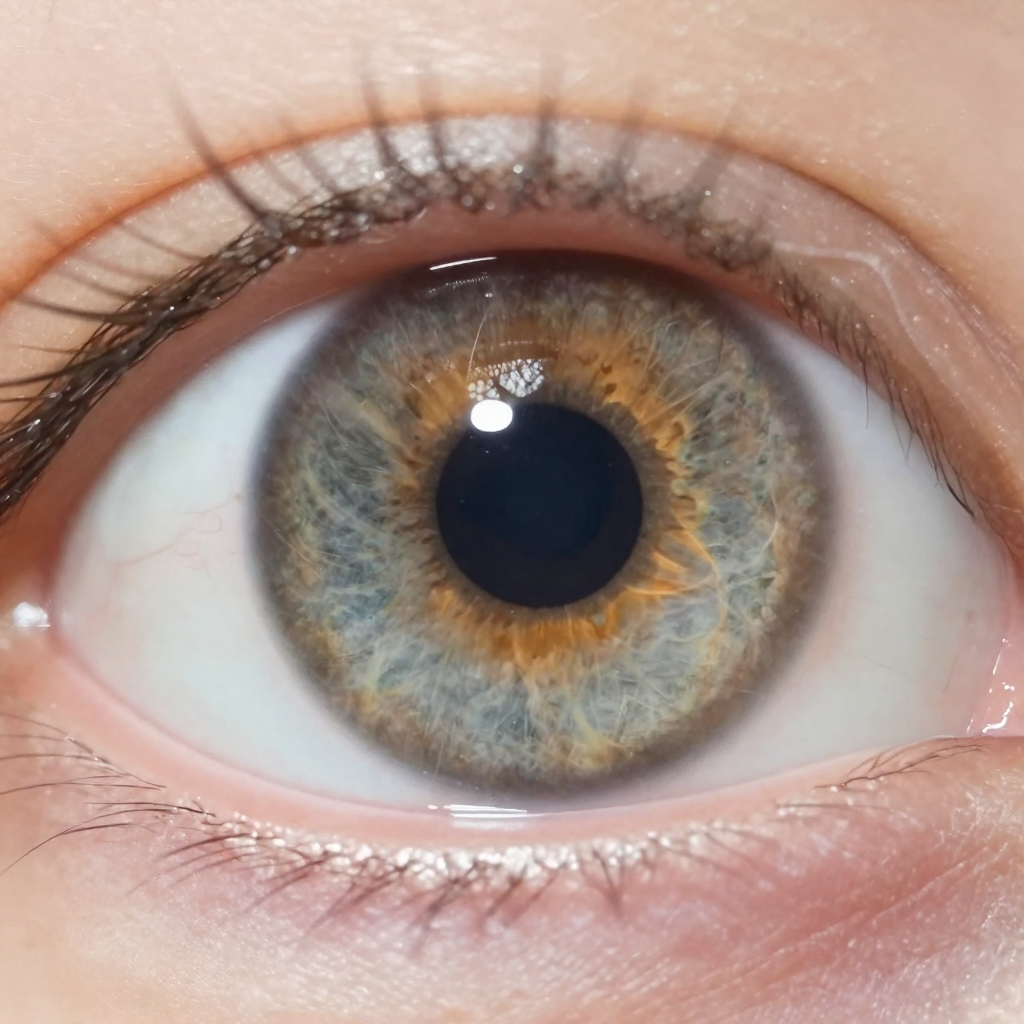
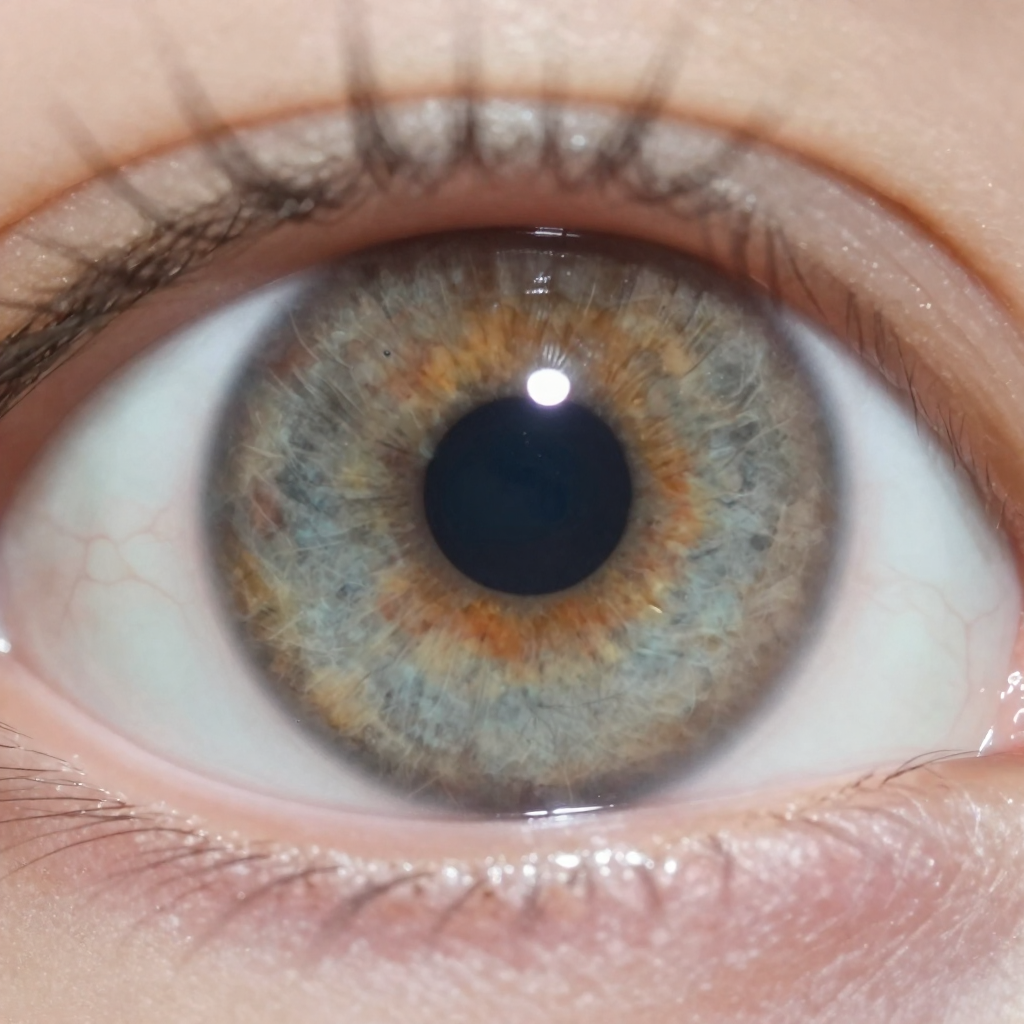
Body systems
How your systems read
Each of the fourteen systems, scored from the markers in your iris. Longer, greener bars read as better-supported.
Your systems at a glance — petal length is the score.
Body map
Where it shows in the body
Iridology maps each part of the iris to the whole body. Green marks zones reading as well-supported; warm tones mark zones to give a little care.
Areas for support
What to keep an eye on
The markers worth a little extra care — each with what it is, how the tradition reads it, and one easy habit.
Kidney and adrenal
Kidneys & adrenals · Urinary system
Psychology function
Mind & mood · Nervous system
Upper abdomen
Upper belly & digestion · Digestive system
Thyroid
Thyroid · Endocrine system
Upper back
Upper back · Muscular system
Upper lung
Upper lungs · Respiratory system
Neck
Neck · Nervous system
Spleen
Spleen & lymph · Digestive system
Strengths
Where you're strong
The well-supported zones your iris reads most positively — worth protecting.
Heart
Heart · Cardiovascular system
Lower lung
Lower lungs · Respiratory system
Eye
Eyes & nerves · Nervous system
Chest
Chest · Respiratory system
Shoulder
Shoulders · Muscular system
Face
Skin & face · Digestive system
Where to start
Your recommendations
The handful of areas that would benefit most, in order — small, doable steps.
Kidney and adrenal
One to watchAdrenal Fatigue Markers
Psychology function
One to watchElevated Stress Response
Upper abdomen
Worth supportingDigestive Sensitivity
Thyroid
Worth supportingThyroid Zone Irregularity
Upper back
Worth supportingMuscular Tension Pattern
Reading your iris
What the markings mean
A quick field guide to the patterns iridology looks for — so you can see what we saw.
Fibre weave
The fine threads radiating out from the pupil, tight or loose.
Tightly, evenly woven fibres are traditionally read as a sturdy constitution; a looser, more open weave as a more sensitive one. Like a fingerprint, everyone's is unique.
Lacunae (open gaps)
Small leaf- or petal-shaped openings in the fibre pattern.
Read as an inherited 'soft spot' in whichever zone they sit — a place to give a little extra care. A pattern to notice, not a health finding.
Stress rings
Faint circular grooves looping around the pupil, like tree rings.
Traditionally linked to people who hold tension and run wound-up. More rings, more of that tendency — a cue to build in real rest.
Radial furrows
Fine lines fanning out from the pupil like spokes on a wheel.
Old readers nicknamed these 'sun rays' and tied them loosely to feeling run-down. An interesting pattern to spot — nothing more.
Pigment flecks
Freckle-like specks of gold or brown in the colour.
A normal, natural variation — most eyes have a few.
If a spot is brand new or changing, mention it to an eye doctor, just like a changing skin freckle.
Collarette (the frill)
The wavy ring about a third of the way out from the pupil.
Treated as a mirror of how tightly-wound vs. relaxed you run — a tight ring inward-leaning, a wide one more outward. Its shape varies naturally.
Lymphatic beads
Tiny pale, cloud-like flecks in a ring near the outer edge.
Linked to the body's drainage — used as a gentle reminder to hydrate, move and rest.
Outer rim
The shading right at the edge of the colour.
Associated with the skin and 'sweating it out' — a light nudge to move and get fresh air.
A pale ring at the very edge is extremely common and harmless; it usually just comes with age.

This sample shows the report layout and interpretation style. Interactive area selection is enabled on your personal report.
Behavioural profile
Who the iris reads you as
A reflective personality lens drawn from your iris structure — like a thoughtful personality quiz, not a medical test.
The Analytical Visionary
You combine deep analytical thinking with creative foresight. Your iris patterns reveal a mind that naturally bridges logic and intuition — capable of dissecting complex problems while maintaining a broader strategic vision. You thrive when given autonomy to explore ideas and tend to approach challenges with systematic curiosity. Your personality balances intellectual rigor with genuine empathy, making you effective in roles that require both precision and people skills.
The lens we used
Behavioural iridology reads the iris's structure — not its health — as a personality map. Most people are a blend of two of these four patterns. Your profile is built from the mix the scan saw most strongly. It's a reflective lens, like a personality quiz, not a scientific or medical test.
Analytical and precise — sees the detail, explains it well.
Warm and expressive — leads with the heart, brings colour.
Steady and empathetic — calm, tactile, holds things together.
Pioneering and restless — fuses head and heart into action.
The five core traits
Highly curious and imaginative. You actively seek novel experiences and enjoy exploring abstract concepts. Your high openness drives creativity and adaptability.
Well-organized with strong follow-through. You balance structured planning with enough flexibility to adapt when circumstances change.
Ambivert with selective social energy. You enjoy meaningful one-on-one conversations but need solitude to recharge. You can present confidently but prefer depth over breadth in relationships.
Cooperative and empathetic while maintaining healthy boundaries. You value harmony but are willing to voice dissent when principles are at stake.
Emotionally stable with occasional stress sensitivity. You handle pressure well overall but may internalize concerns rather than expressing them immediately.
Cognitive style
Where your openness and structure place you — practical to imaginative, spontaneous to deliberate.
How your mind works
Thinking style
Analytical-Intuitive
Decision making
Deliberate
Under stress
Proactive
Learns best
Visual-Logical
At work
In professional settings, you excel as a strategic thinker who brings both data-driven analysis and creative problem-solving to the table. You prefer clear objectives but flexible methods. Team members value your ability to see patterns others miss, though you may sometimes need to translate your insights into more concrete action steps for others. You perform best with autonomy and do your deepest work in focused, uninterrupted blocks.
In relationships
You form deep, meaningful connections with a select circle rather than maintaining a wide social network. Your analytical nature means you understand relationship dynamics well, but you may sometimes overthink emotional situations. You show care through thoughtful actions and attentive listening rather than grand gestures. Partners and close friends appreciate your reliability and the depth of your engagement.
Key strengths
- Pattern recognition — You naturally identify connections and trends that others overlook, making you valuable in strategy and problem-solving roles.
- Balanced decision-making — Your combination of analytical rigor and emotional intelligence leads to well-rounded judgments.
- Intellectual curiosity — Your high openness drives continuous learning and keeps your knowledge base fresh and expanding.
- Emotional resilience — Low neuroticism combined with moderate agreeableness means you handle criticism and setbacks constructively.
- Focused depth — You bring thorough, deep attention to topics that matter to you, producing high-quality work.
Worth watching
- Analysis paralysis — Your love for gathering information may sometimes delay action. Setting decision deadlines can help.
- Underestimating social energy needs — As an ambivert, you may push through social fatigue without recognizing the need for recovery time.
- Perfectionism in communication — You may over-edit or delay sharing ideas until they feel fully formed, missing early feedback opportunities.
- Difficulty delegating — Your high standards and deep engagement can make it hard to trust others with important tasks.
Your growth plan
A few concrete things to try — small enough to start this week.
Practice Iterative Thinking
Challenge yourself to share ideas at 70% completion rather than waiting for perfection. This builds faster feedback loops and reduces analysis paralysis.
Leverage Your Pattern Recognition
Seek roles or projects that require synthesizing complex information — strategic planning, systems design, or research. These align with your natural strengths.
Schedule Recharge Time
Proactively block recovery time after intensive social periods. This prevents burnout and keeps your social interactions energized and genuine.
The full picture
Detailed analysis
The complete constitutional narrative behind your reading.
The bilateral iris analysis demonstrates a mixed constitution with predominantly blue-green coloration, indicating a lymphatic-biliary constitutional type. Fiber density analysis reveals tight, well-organized fiber patterns in the cardiovascular and respiratory zones (sectors 3-5), scoring in the 85th-92nd percentile for structural integrity. The autonomic nerve wreath shows moderate constriction patterns consistent with sympathetic dominance, particularly in the left iris (maternal inheritance pattern). Pupillary border irregularities in the adrenal reflex zones correlate with the elevated stress markers identified in the primary findings. Collarette analysis reveals slight thickening in the digestive zones, supporting the digestive sensitivity observations. The limbic and cerebral zones show clear fiber patterns with minimal disruption, correlating with the strong cognitive markers identified in the personality assessment. Lacunae mapping identified minor open lacunae in the upper abdominal and thyroid zones, consistent with constitutional tendencies rather than acute conditions. Radial furrows are minimal except in the upper back and neck regions, suggesting localized tension patterns. Overall, this iris presents a strong constitutional foundation with specific areas that would benefit from targeted wellness strategies, particularly around stress management and digestive optimization.
Steady
Stable areas
Zones that read as balanced — no special attention needed.
Medula
Nervous system
No issues or strengths detected
Ear
Nervous system
No issues or strengths detected
Arm and hand
Muscular system
No issues or strengths detected
Ovaries and testis
Reproductive system
No issues or strengths detected
Pelvis
Reproductive system
No issues or strengths detected
Lower abdomen
Digestive system
No issues or strengths detected
Groin
Reproductive system
No issues or strengths detected
Leg and foot
Muscular system
No issues or strengths detected
Rectum
Digestive system
No issues or strengths detected
Bladder
Urinary system
No issues or strengths detected
Vagina/Uterus
Reproductive system
No issues or strengths detected
Penis/Prostate
Reproductive system
No issues or strengths detected
Lower back
Muscular system
No issues or strengths detected
Scapula
Muscular system
No issues or strengths detected
Esophagus
Digestive system
No issues or strengths detected
Trachea
Respiratory system
No issues or strengths detected
Throat
Digestive system
No issues or strengths detected
Mouth
Digestive system
No issues or strengths detected
Nose
Respiratory system
No issues or strengths detected
Your overall vitality reads around 85 out of 100 in this snapshot — a wellness reflection, not a medical score.
A note on this report: Iridology is a wellness and educational tradition, not a medical diagnosis. This analysis is for informational purposes only and is not a substitute for professional medical advice. Always seek the advice of your physician with any questions about a medical condition.